Lower storage weight
A lightweight structure reduces vessel mass and the weight carried by the vehicle or transport system.

Application & Value
High-pressure hydrogen storage with lower structural mass.
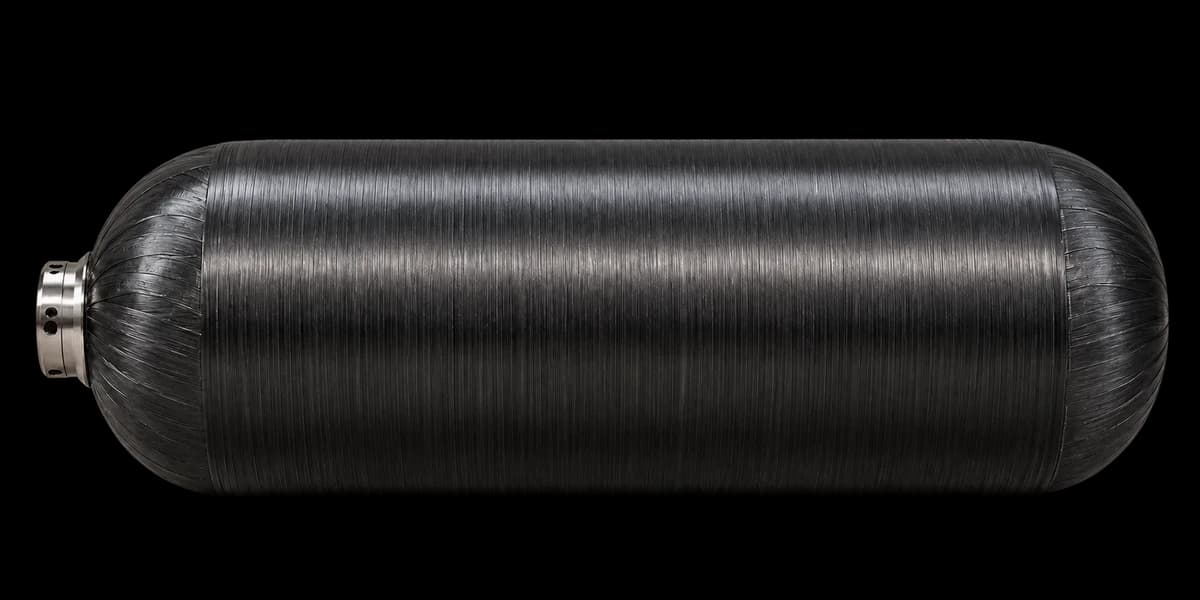
Compressed hydrogen subjects a vessel to high internal pressure and repeated filling cycles. Gas retention, weight and available space must be considered together. In mobile storage, vessel weight affects the usefulness of the entire system.
In a composite vessel with an internal gas barrier, the fibre-reinforced shell carries the main pressure loads. The inner layer limits hydrogen permeation. This allows structural strength and gas retention to be tailored to their respective tasks. Connections and mounts bring these functions together in a usable storage system.
A lightweight structure reduces vessel mass and the weight carried by the vehicle or transport system.
In weight-limited transport, lower vessel mass can leave room for more hydrogen payload. Available space and permitted total weight remain decisive.
The gas barrier and load-bearing shell serve different purposes. Coordinating them combines gas retention with low structural weight.
When a product must both carry loads and contain a fluid or gas, separating these functions can be useful. Each part can be tailored to its task, while the interfaces bring the system together. For other applications, the relevant question is whether this division improves weight, usable capacity or operation.
CoDe structures your challenge and clarifies relevant solution directions. CoDe Matching connects your enquiry with suitable capabilities and companies. You gain a sound basis for your decision.