Lower vehicle weight
A lighter enclosure reduces vehicle weight and can lower driving energy demand. The benefit is assessed at vehicle level.

Application & Value
Combine battery protection, low weight and integrated functions.
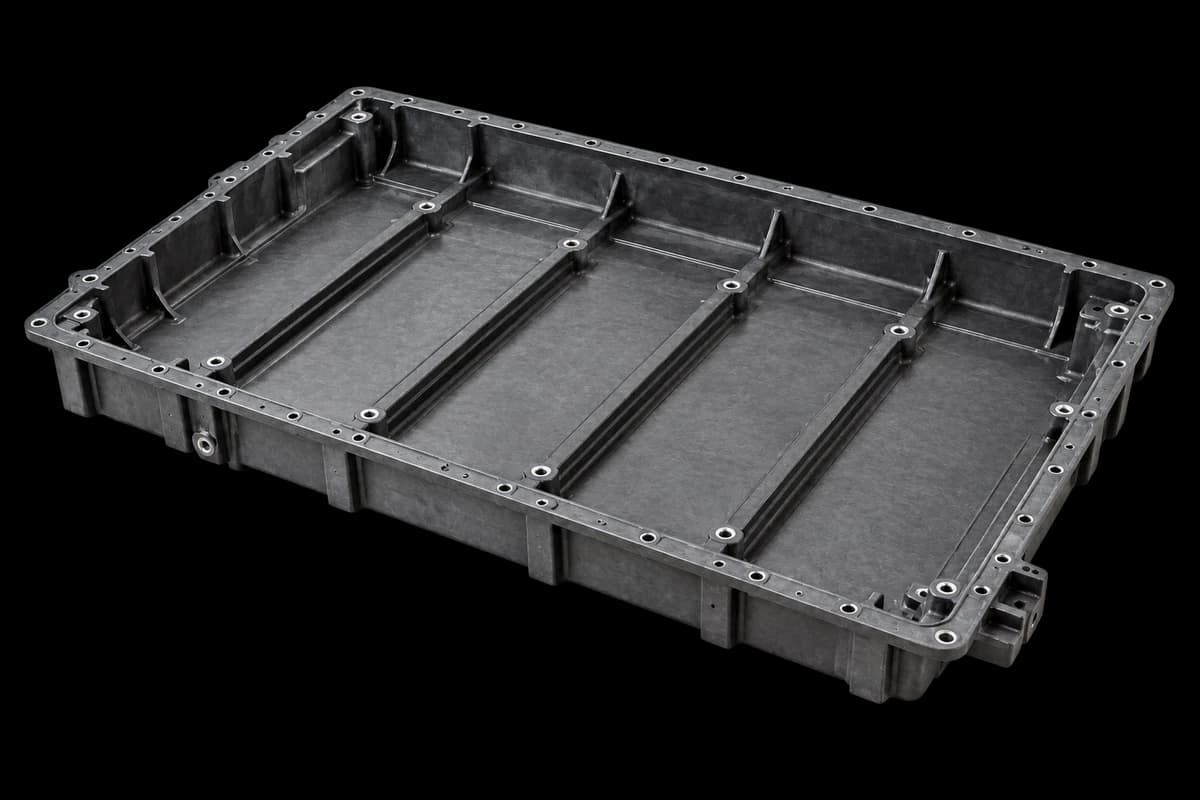
A battery enclosure must protect the battery and fit the vehicle structure. Mechanical loads, sealing, temperature and weight converge in one large component.
Composite shells can combine structural and protective functions. Geometry and local reinforcement support mechanical loads and attachment to the vehicle. Additional functional features address sealing and thermal requirements. Value comes from bringing these tasks together in the enclosure.
A lighter enclosure reduces vehicle weight and can lower driving energy demand. The benefit is assessed at vehicle level.
Integrated mounting and protective functions can reduce separate parts, connections and assembly steps.
Suitable constructions can shield the battery from external heat and cold, integrating the enclosure into the thermal system concept. Fire protection requires separate verification.
For enclosures, a comparison should include all the functions they perform. Developing structure, mounting and protection together can create benefits in weight and assembly. For other products, this suggests examining which previously separate tasks could usefully be combined in one component.
CoDe structures your challenge and clarifies relevant solution directions. CoDe Matching connects your enquiry with suitable capabilities and companies. You gain a sound basis for your decision.